
Species Profile
Flatback Turtles (Natator depressus)
Flatback turtles are one of Australia’s most distinctive marine turtle species. Found only in northern Australian and nearby coastal waters, they are unique for their flattened shell, inshore lifestyle, and close connection to healthy coastal ecosystems.
Overview
Australia’s unique inshore sea turtle
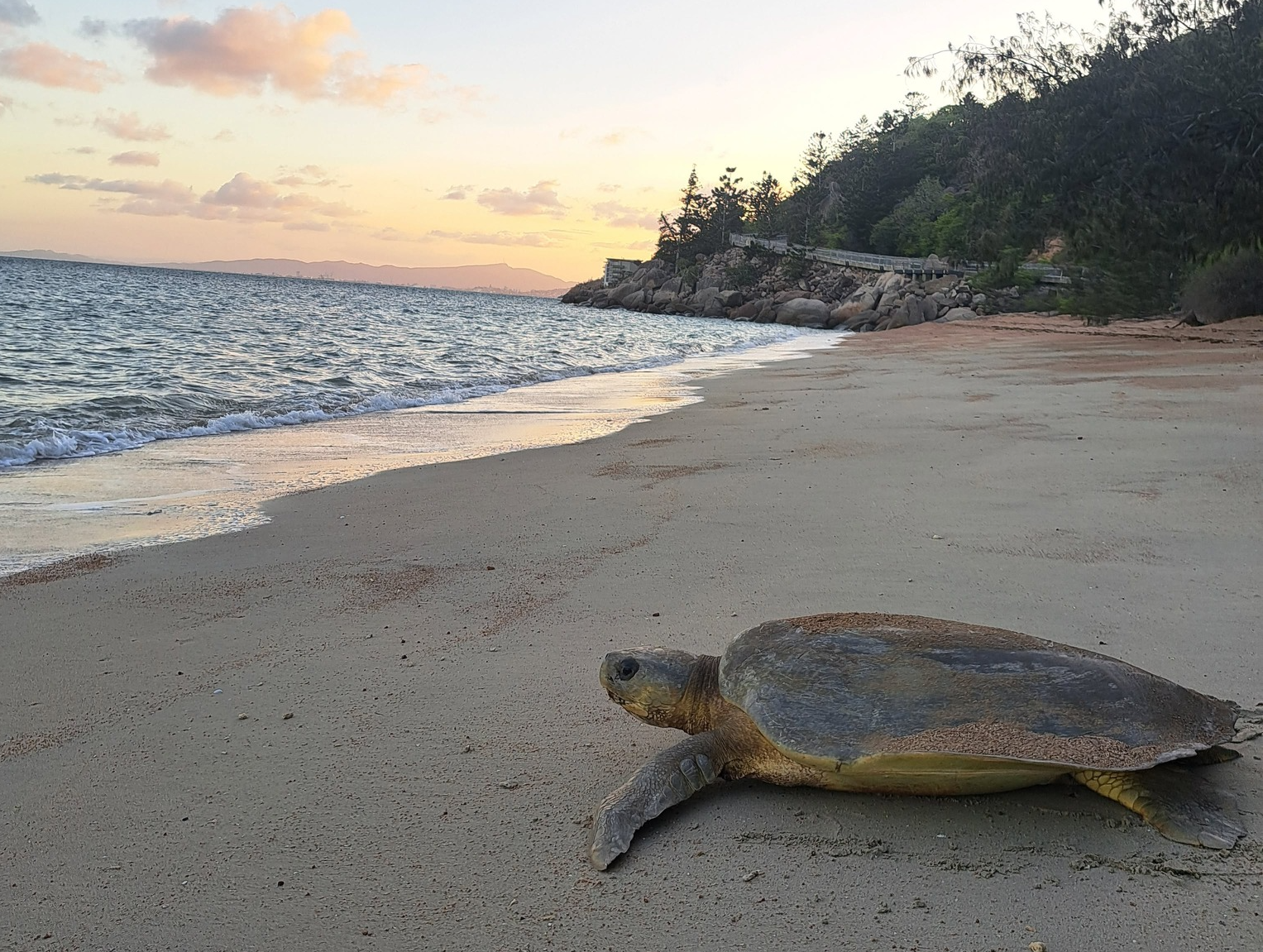
The flatback turtle is one of the world’s seven marine turtle species and the only one found almost entirely within Australian waters. Its name comes from the shape of its shell, which is flatter and smoother than that of other sea turtles. This distinctive shell gives the species a recognisable profile and reflects its adaptation to life in shallow coastal seas.
Unlike other marine turtles that migrate across entire ocean basins, flatbacks are closely associated with Australia’s continental shelf. They are generally found in shallow coastal and inshore waters, including bays, estuaries, seagrass meadows, reef areas and soft-bottom habitats.
Flatback Turtle
Natator depressus
Distribution: Northern Australia and nearby coastal waters
Habitat: Shallow coastal and inshore marine environments
Diet: Soft-bodied invertebrates such as jellyfish, sea cucumbers, molluscs and crustaceans
Conservation importance: A species found largely within Australian waters, making local protection especially important
Appearance and biology
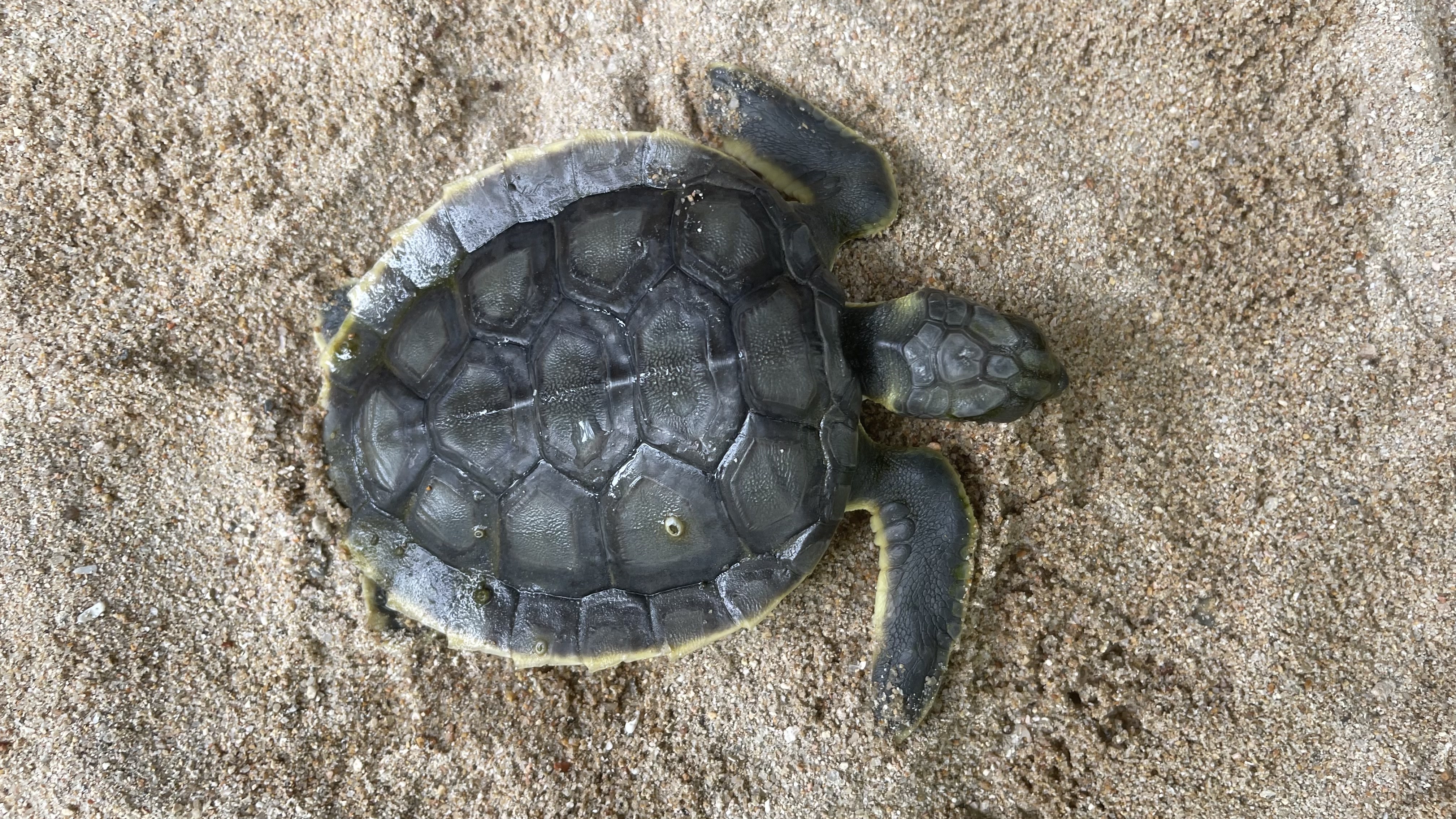
Adult flatback turtles are medium to large in size and are usually olive-grey to greenish on the upper shell, with a pale underside. Their shell is relatively thin and has slightly upturned edges. Hatchlings are also unusual, as they are larger than those of other marine turtle species, giving them a stronger start in life.
Flatbacks feed mainly on soft-bodied animals found on or near the sea floor. Their diet includes jellyfish, sea cucumbers, soft corals, molluscs, prawns and other invertebrates. As coastal foragers, they play a role in maintaining the ecological balance of marine habitats.
Life cycle
Flatback turtles nest on sandy mainland and island beaches in northern Australia, including important areas in Queensland, the Northern Territory and Western Australia. Females come ashore to lay eggs above the high tide line, usually at night.
After an incubation period of around seven to eight weeks, hatchlings emerge and make their way to the sea. Unlike many other sea turtle species, flatback turtles do not appear to spend an extended juvenile phase drifting in the open ocean. Instead, juveniles are thought to remain within coastal waters.
Threats
Conservation challenges
Beach and nest threats
Eggs and hatchlings are vulnerable to predation by feral animals, disturbance on nesting beaches, erosion and habitat loss.
Marine hazards
In the water, flatbacks face threats from marine debris, entanglement in fishing gear, boat strike and declining habitat quality.
Climate change
Rising sand temperatures, sea-level rise and more intense weather events may affect nesting success, hatchling survival and long-term population resilience.
Why they matter
Protecting a uniquely Australian species
Because flatback turtles are found largely within Australian waters, conservation action in Australia is critical to their survival. Protecting nesting beaches, reducing marine pollution, supporting rescue and rehabilitation, and improving coastal habitat management all help safeguard the future of this remarkable species.
Flatback turtles are an important part of Australia’s natural heritage. Their limited range, specialised biology and dependence on healthy coastal habitats make them both distinctive and vulnerable.
Learn more
Sea turtle conservation starts with understanding
Discover more about the sea turtles of northern Australia and the work being done to protect them.