
Species Profile
Green Sea Turtles (Chelonia mydas)
Green sea turtles are among the most recognisable marine turtle species in the world. Graceful, long-lived and closely associated with seagrass meadows and coral reef habitats, they play an important role in maintaining the health of coastal marine ecosystems.
Overview
A widely recognised marine turtle
The green sea turtle is one of the world’s seven marine turtle species and is found in tropical and subtropical waters around the globe. In Australia, it occurs in coastal and offshore waters, including seagrass meadows, coral reefs, bays and estuaries. It is one of the species most commonly encountered in northern Queensland and across the Great Barrier Reef region.
Despite its name, the green turtle is not named for the colour of its shell. Instead, the name is thought to refer to the greenish colour of its body fat, which is influenced by its largely herbivorous diet. Adults are typically seen with a smooth, heart-shaped carapace that can range in colour from olive to brown, often with attractive mottled patterns.
Green Sea Turtle
Chelonia mydas
Distribution: Tropical and subtropical oceans worldwide
Habitat: Seagrass meadows, coral reefs, coastal bays and estuaries
Diet: Mainly seagrass and algae as adults, with a more varied diet in early life
Important grazers that help maintain healthy seagrass ecosystems Appearance and ecology
Appearance and biology
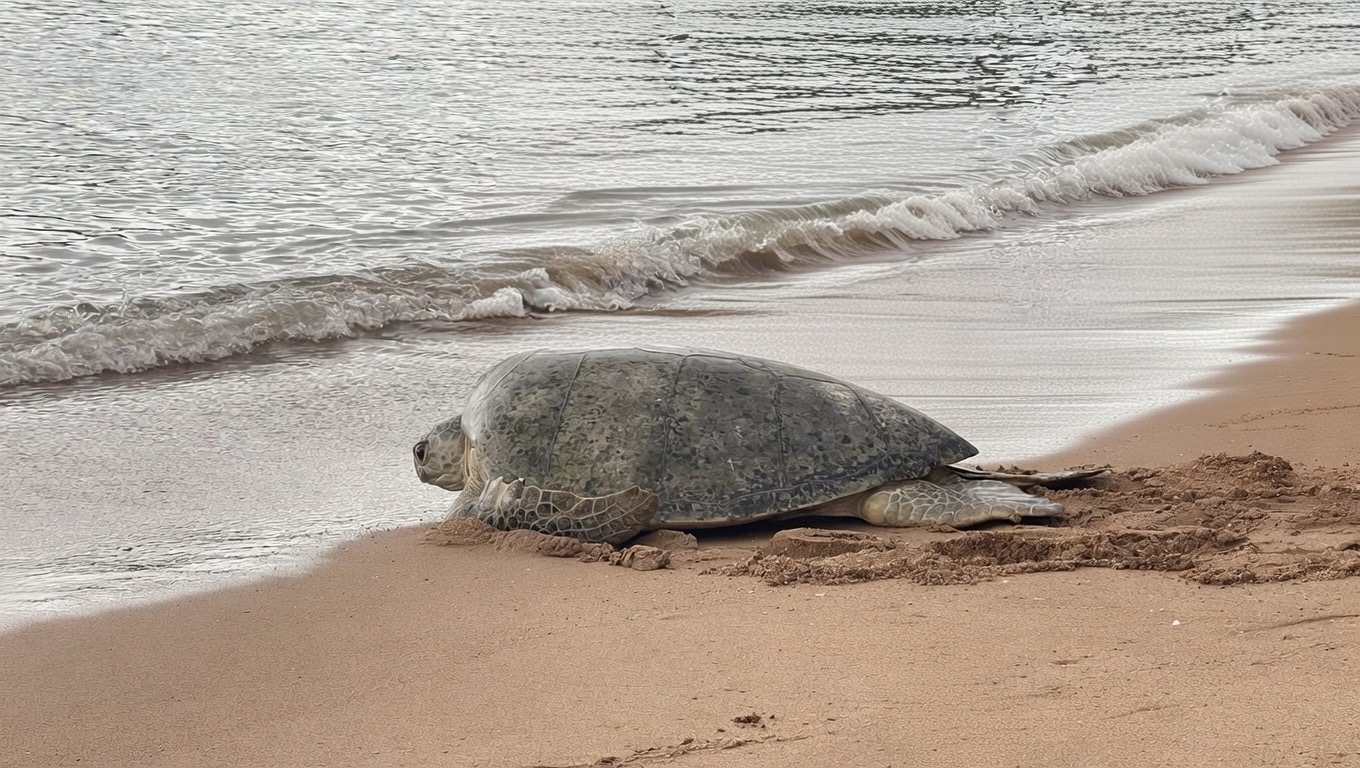
Green sea turtles are large marine reptiles with streamlined bodies and powerful front flippers adapted for efficient swimming. Adults can grow to more than one metre in shell length and may weigh well over 100 kilograms. Their relatively small head and smooth shell help distinguish them from some other sea turtle species.
As adults, green turtles feed mainly on seagrass and algae, making them one of the few predominantly herbivorous marine turtle species. By grazing regularly, they help maintain productive seagrass beds, which in turn support fish, invertebrates and other marine life. Healthy seagrass systems are also important for carbon storage and shoreline stability.
Life cycle
Female green turtles return to sandy beaches to nest, often on islands and mainland beaches in tropical and subtropical regions. In Australia, significant nesting occurs in places such as the northern Great Barrier Reef, Torres Strait and other northern coastal areas. Females lay eggs in nests dug above the high tide line, usually at night.
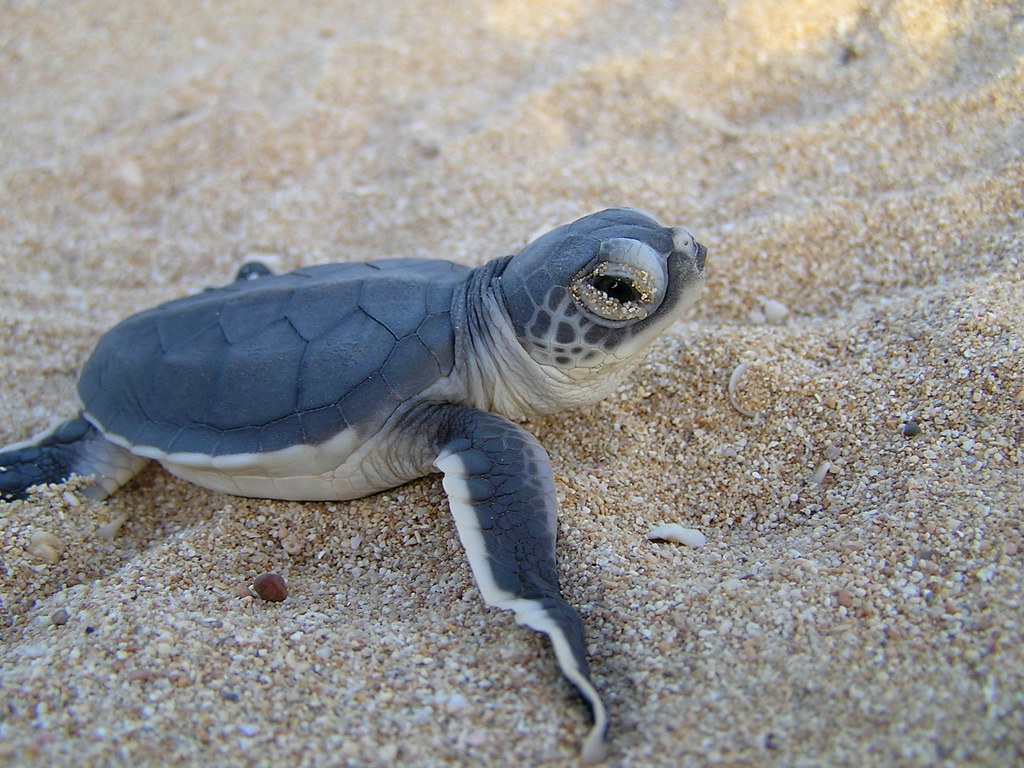
After incubating in warm sand for around two months, hatchlings emerge and race to the sea. Young turtles spend their early years in the ocean before gradually recruiting to coastal feeding grounds. Green turtles are long-lived and slow to mature, meaning population recovery can take many decades even when conservation efforts are successful.
Threats
Conservation challenges
Marine debris
Green turtles may ingest plastic and other debris, or become entangled in discarded fishing gear and marine litter.
Habitat loss
Damage to seagrass meadows, reef systems and nesting beaches can reduce food availability, shelter and reproductive success.
Climate change
Rising temperatures, sea-level rise, extreme weather events and shifting ocean conditions may affect nesting beaches and hatchling survival.
Why they matter
Protecting a vital marine species
Green sea turtles are more than an iconic ocean animal. They are part of the living system that keeps marine habitats functioning well. Their grazing supports healthy seagrass beds, and their presence reflects the condition of the environments they depend on.
Protecting green turtles means protecting the broader coastal ecosystems that also support countless other species. Conservation measures such as reducing marine pollution, safeguarding nesting beaches, protecting feeding habitats and supporting rescue and rehabilitation all contribute to their future.
Learn more
Sea turtle conservation starts with understanding
Discover more about the sea turtles of northern Australia and the work being done to protect them.