
Species Profile
Hawksbill Turtles (Eretmochelys imbricata)
Hawksbill turtles are among the most striking of all marine turtle species. Recognised for their beautifully patterned shell and narrow, pointed beak, they are closely associated with coral reefs and play a valuable role in maintaining the health and diversity of reef ecosystems.
Overview
A reef specialist with a distinctive beak
The hawksbill turtle is one of the world’s seven marine turtle species and is found in tropical and subtropical waters of the Atlantic, Indian and Pacific Oceans. In Australia, hawksbills occur mainly in northern waters, particularly around coral reef and rocky reef habitats, including parts of the Great Barrier Reef, Torres Strait, the Northern Territory and Western Australia.
Hawksbills are named for their sharply curved beak, which resembles that of a bird of prey. This pointed mouth is perfectly adapted for reaching into crevices and holes in coral reefs to extract food. Their shell is often richly patterned in amber, brown and gold tones, making them one of the most visually distinctive sea turtles.
Hawksbill Turtle
Eretmochelys imbricata
Distribution: Tropical and subtropical oceans, including northern Australian waters
Habitat: Coral reefs, rocky reefs, lagoons and nearby coastal waters
Diet: Primarily sponges, along with other reef-associated invertebrates
An important reef species and globally listed as Critically Endangered

Appearance and biology
Hawksbill turtles are medium-sized marine turtles with a streamlined body, overlapping scales on the shell, and a narrow head with a strongly pointed beak. Their shell shape and agile swimming style make them well suited to navigating coral reef environments. These habitats provide both food and shelter, and hawksbills are often closely associated with healthy reef systems.
Unlike green turtles, which are largely herbivorous as adults, hawksbills feed mainly on sponges and other soft-bodied reef animals. This specialised diet helps make them important to reef ecology, as their feeding may influence sponge growth and competition on coral reefs. Their role in reef systems is one reason they are considered an important indicator of marine ecosystem health.
Life cycle
Female hawksbill turtles return to tropical beaches to nest, often laying several clutches during a breeding season. In Australia, nesting occurs mainly in northern regions, including reef islands and remote coastal areas. As with other sea turtles, females come ashore at night to dig nests above the high tide line and lay eggs in warm sand.
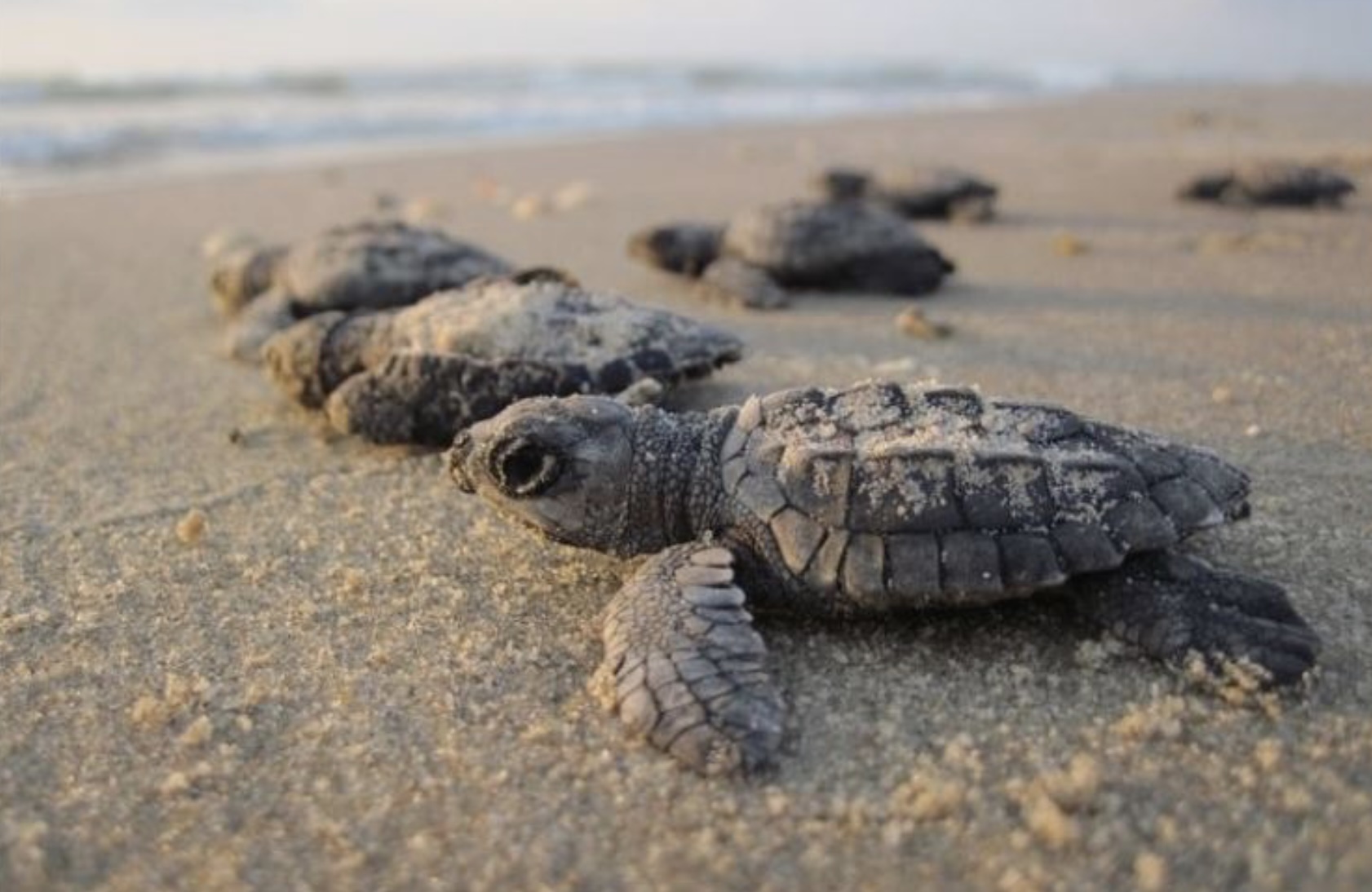
After incubation, hatchlings emerge and head for the sea, where they begin an early life stage that is still not fully understood. As they grow, juveniles eventually recruit to coastal reef habitats. Hawksbills are long-lived and slow to mature, which means population recovery can be very gradual even where threats are reduced.
Threats
Conservation challenges
Reef habitat decline
Damage to coral reefs from climate change, pollution and other disturbances can reduce feeding habitat and shelter for hawksbill turtles.
Marine debris and entanglement
Hawksbills are at risk from discarded fishing gear, plastics and other marine debris that can injure or kill turtles in the water.
Nesting beach disturbance
Coastal development, predators, erosion and human disturbance can affect egg survival and reduce nesting success.
Why they matter
Protecting a turtle that supports reef health
Hawksbill turtles are a remarkable part of tropical marine ecosystems. Their specialised feeding habits and close association with coral reefs make them ecologically important as well as visually iconic. Protecting hawksbills also means protecting reef environments that support countless other marine species.
Conservation measures such as safeguarding reef habitats, protecting nesting beaches, reducing marine pollution and supporting rescue, rehabilitation and research all contribute to the future of this species. By helping hawksbill turtles survive, we also help protect the rich and complex ecosystems they call home.
Learn more
Sea turtle conservation starts with understanding
Discover more about the sea turtles of northern Australia and the work being done to protect them.